
Selecting the right steel material is one of the most important decisions for any manufacturing, fabrication, or construction project. Among the most commonly used steel products are Hot Rolled Coil (HRC) and Cold Rolled Coil (CRC). While both are produced from the same raw steel, their manufacturing processes and applications differ significantly.
Understanding these differences will help you choose the right material, improve product quality, and optimize project costs.
What is Hot Rolled Coil (HRC)?
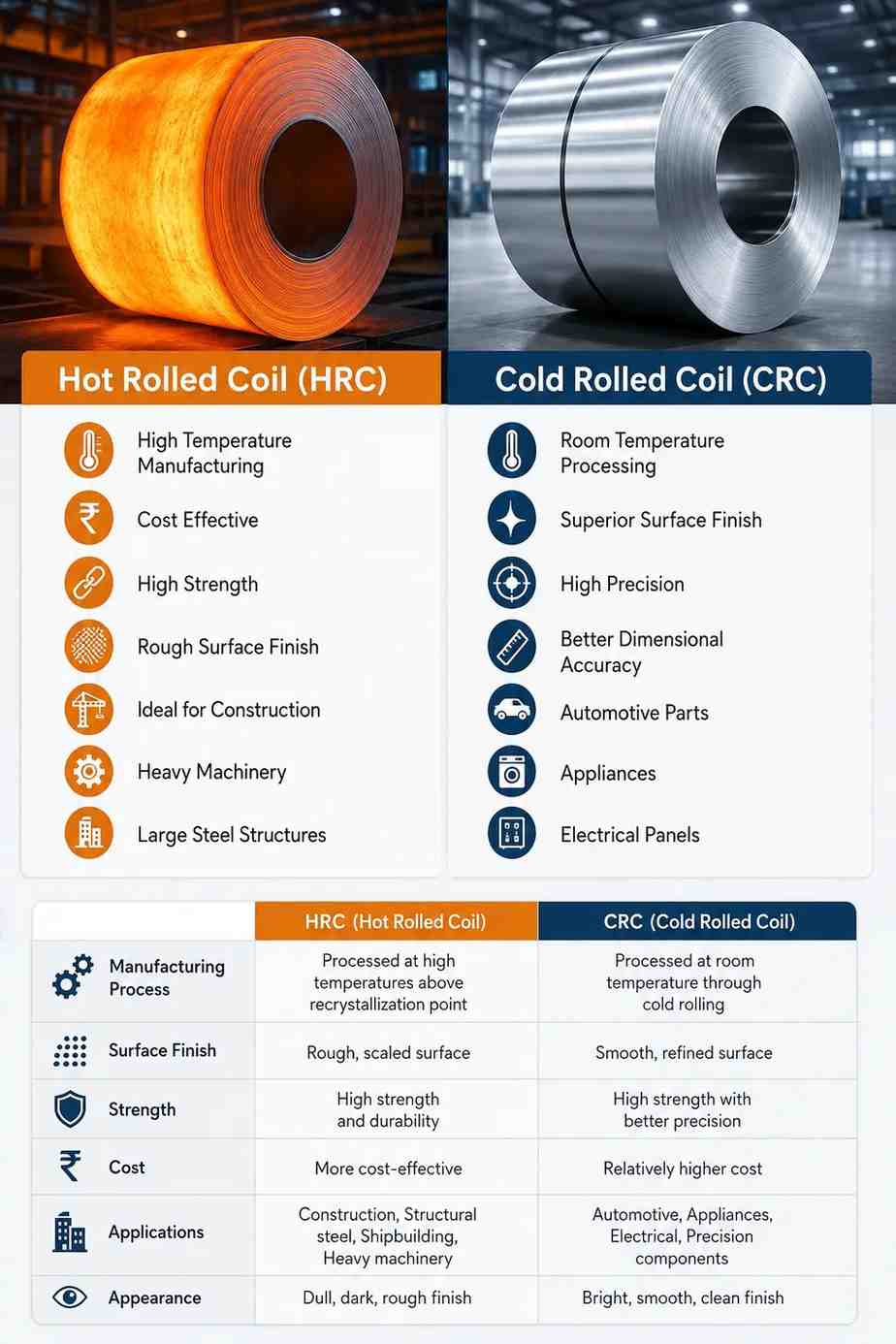
Hot Rolled Coil is manufactured by rolling steel at temperatures above 1,700°F (927°C). Since the steel is processed at high temperatures, it is easier to shape into larger sections, making it ideal for structural and industrial applications.
starsKey Benefits
- check_circleCost-effective for large-scale projects
- check_circleHigh strength and durability
- check_circleEasy to weld and fabricate
- check_circleSuitable for heavy engineering applications
factoryCommon Industries
Construction, infrastructure, shipbuilding, automotive chassis, pipelines, and heavy machinery.
What is Cold Rolled Coil (CRC)?
Cold Rolled Coil is manufactured by further processing hot rolled steel at room temperature. This additional process enhances the steel's surface finish, dimensional accuracy, and strength.
workspace_premiumAdvantages
- check_circleSmooth and polished surface
- check_circleBetter dimensional tolerance
- check_circleImproved mechanical properties
- check_circleIdeal for precision manufacturing
precision_manufacturingCommon Industries
Automobile components, electrical panels, furniture, home appliances, office equipment, and precision engineering.
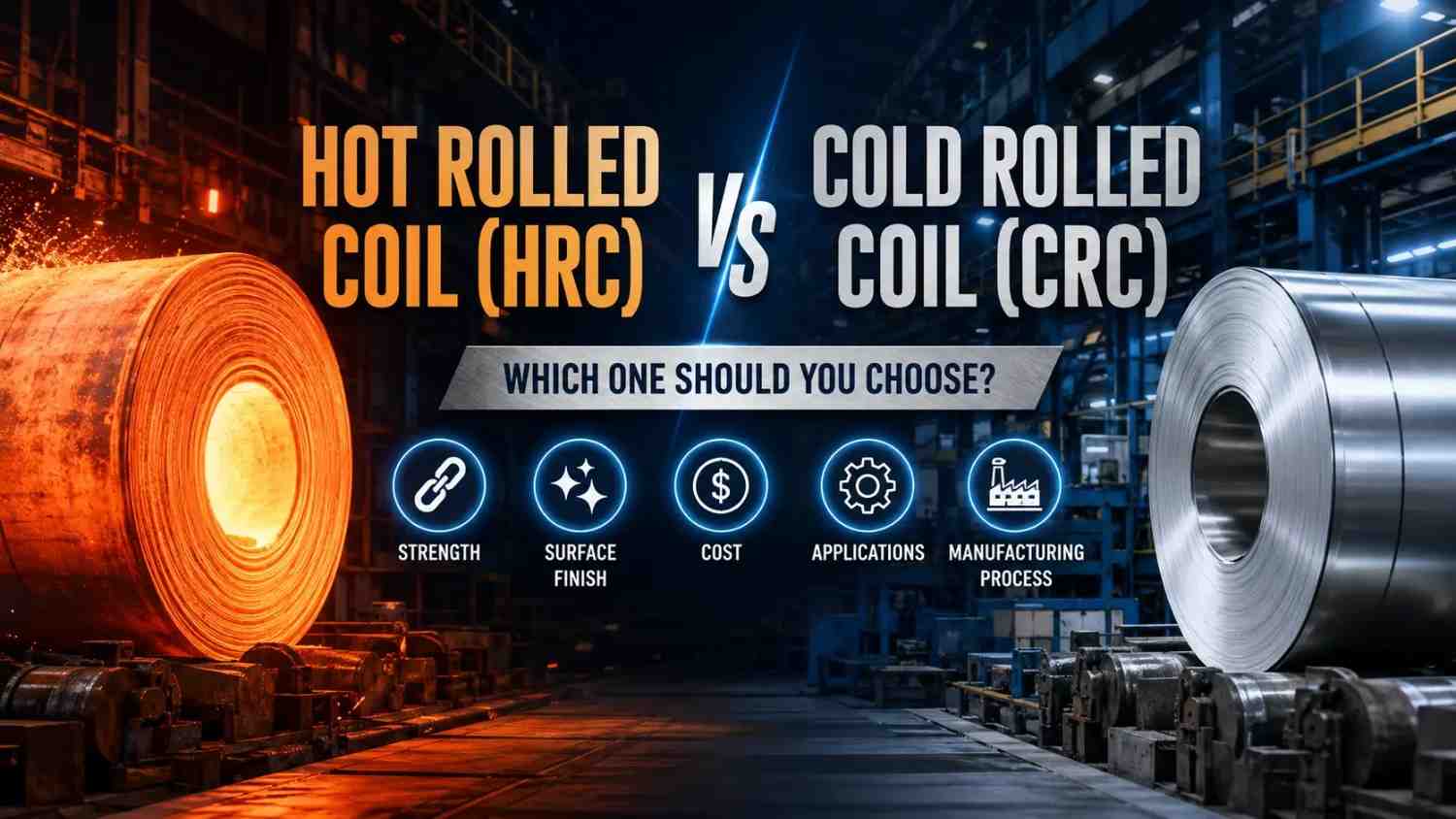
HRC vs CRC: Which One Should You Choose?
Your choice depends on the intended application.
Choose HRC if your project requires structural strength, easy fabrication, and economical pricing. It is the preferred option for construction and industrial manufacturing.
Choose CRC if appearance, precision, and tighter tolerances are essential. It is commonly selected for products where surface finish plays a significant role.
The right selection can improve production efficiency while reducing material costs over time.
psychology_altFrequently Asked Questions
Is HRC cheaper than CRC?
Yes. HRC generally costs less because it undergoes fewer manufacturing processes.
Which steel is stronger?
CRC typically offers higher tensile strength due to the additional cold rolling process.
Which steel has a better surface finish?
CRC provides a smoother, cleaner, and more uniform finish than HRC.
Can HRC be used for precision parts?
HRC is better suited for structural applications, while CRC is preferred for precision components.